I turned 30 on October 14th at 11PM PST.
Before around and after then- where I’ve been:
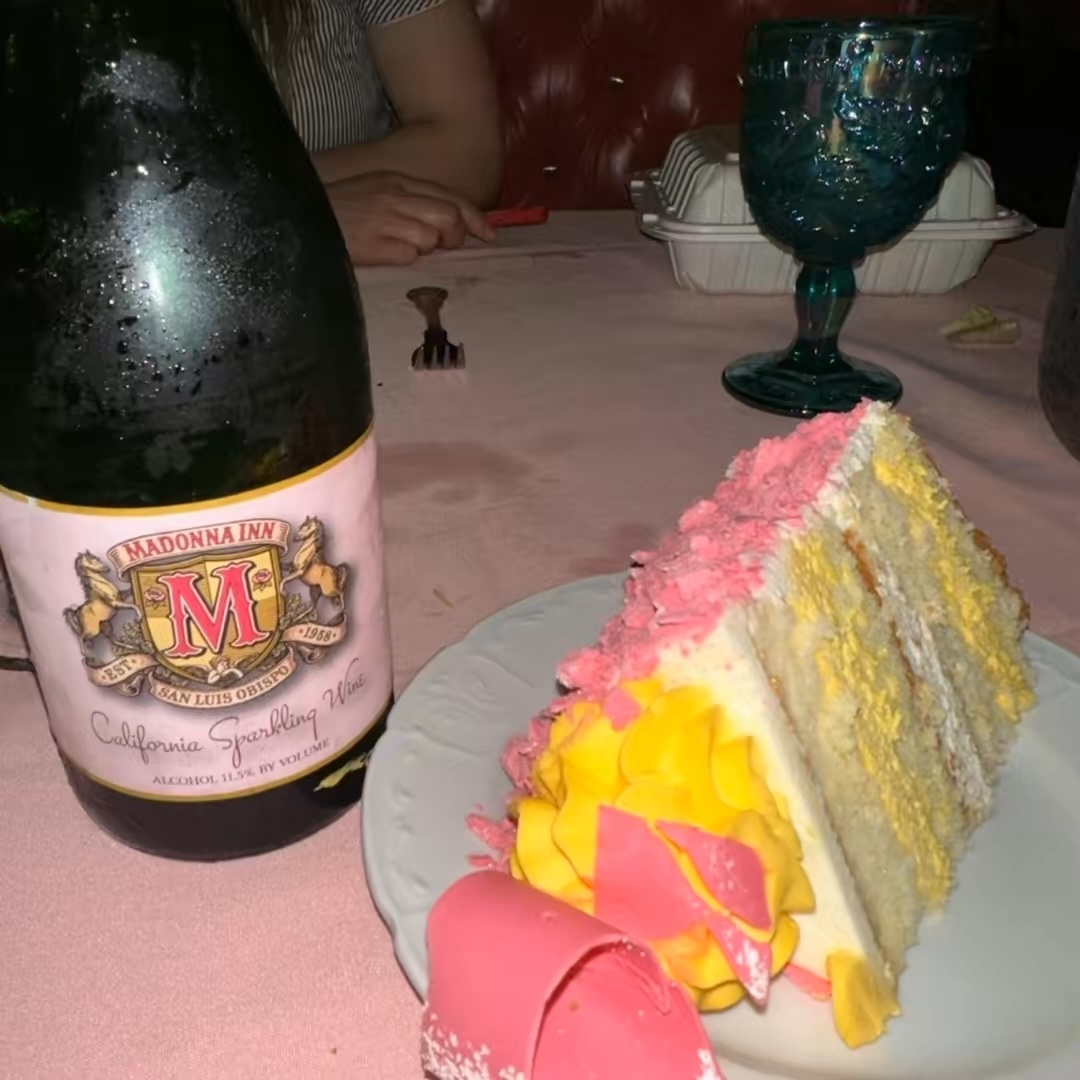
Chicago: Thanksgiving in Evanston with my Dad’s side of the family. Smoke rising in spirals beneath the church steeple on Main Street, a slice of lady finger ice box cake frozen into chalky deliciousness for Milo’s birthday, crocheted tulips on Nini’s cardigan (I’m so lucky I have so much to remember her by,) a laminated card given to guests at Penelope Egan’s funeral- her as a little girl in a pink silk dress and white blonde halo of hair.
The shape of childhood
Vanishes with the speed of light.
LA: I can’t get enough, familiar palm trees and hills that sigh into snow capped mountains above Sunset, the twisting ocean where my mom swims with the seals and mermaids, her locks of hair waiting to be braided into intricate Victorian-inspired mourning jewelry, and people, my people, who I can’t see enough of, who I adore.
San Diego: For the ALS Symposium as part of the Patient Fellows Program- another experience that left me dumbfounded, amazed, enraged, hopeless, hopeful and curious. Doodles on my notebook scrawled with pages and pages of scribbled notes on biology and therapeutics strategies, ideas I’m using to force my mind wide open, hungry to know, to understand what happened in my mom’s body, what may be starting to happen in my body, different ways we may be able to dam the flood.
NYC: I have never been so busy in my life. It’s this elated, chaotic joy of adulthood, feeling more myself, feeling prouder of myself, falling more in love with myself and trusting myself to accomplish my dreams.
I was 27 when I reread the text my aunt sent me about my risk- “I hope she doesn’t end up crazy like her mother.” Three years. 30 is so intricate. I feel less and less girl and more and more woman- so strange. I feel so charged with purpose, ideas, challenge, joy. It makes me elated when people see that. And because I’m not in my 20s anymore, I’m maybe, perhaps, closer to developing disease. Not a day goes by that I don’t think about it.
There are weeks that fly so quickly I feel like I can’t even touch them. And some weeks where I cry almost every day. Mostly I’m just working hard- engaging in my sweet, sweet time on this earth.
I had my second visit with an ALS study at Columbia. It went by more quickly than last year, and I’m smarter than I was last year. I see things with a keener sense of how can I help protect those at risk and who have developed disease. Why is my opportunity to ask a top name in the field questions I’ve been curating all year when I’m hunched over with a needle in a spine collecting CSF, weak and nauseous, the room spinning around me? Why am I told that I’m ineligible for regular monitoring and care from a neurologist because I’m young? It’s not okay. I demand better. For all of us.
I’ve been so grateful to be chosen for these programs for ALS research. There is so much to say here because there is so much happening in the ALS space. I cannot help but feel hopeful- everywhere I look there’s some new approach to TDP-43 dysfuction. I speak up representing End The Legacy at poster presentations- “What about gene carriers? Would you try this in them? Before disease starts?” I may not have booked a show in three years but I do get to help change the world in this way. More dazzling to me than a Broadway debut, I got to help my amazing friend Yentli create some videos for the at-risk community explaining the biology of C9 disease and helping her interview some of the top names in the field- like Claire Clelland and Philip Wong. Yentli is a force to be reckoned with! I’m amazed by her! She’s a gene-positive MD-PHD student determined to help cure C9 disease- and I’m so honored to call her my friend.
Like me, Yentli has dozens of projects- most of hers in service of C9 research. I helped her create some of these videos explaining disease pathology:
I am so grateful for the visibility ALS has now compared to 15 years ago. And always in ALS spaces- at every conference- I feel this enormous weight and fascination- will you please let me talk about FTD? There’s no FTD Symposium. Will you listen?
It’s lonely. It’s painful- feeling chronically unseen- grappling with my various “invisible” medical and psych conditions with no answer, no treatment, no visibility. I used to want to be a doctor and here I am as a patient that medicine doesn’t know what to do with. My Dysautonomia symptoms have gotten worse and more frequent. I was the one to diagnose myself with my own research, given my symptoms and how they started immediately after a viral infection in 2022. There are days I have to call out of work because sitting upright makes me feel too dizzy, weak and nauseous. I have intense pain in my chest or twitching in my back and I think- is this C9? An update on my heart- my QtC is slightly prolonged because I take Lexapro. At least that’s not genetic. I’ve seen two cardiologists and neither are able to order a tilt table test, which I need for an official diagnosis. I had one ask me why I even wanted a diagnosis when there’s nothing they can do… how familiar. I’m on the waitlist to see a specialist. Ten more months.
My poor mom, left to rot by society, by her friends, by medicine because it was FTD.
I was in a support group recently where I confided in my utter primal devastation over the prospect of getting FTD. Not ALS- I can’t even imagine getting ALS, so I’m not afraid of it. FTD- this I can see played out in my mind’s eye- sqaying inappropriate things, having run-ins with authority, losing jobs, and never knowing that I did something wrong. Someone attempted to comfort me by saying that their loved one probably developed FTD because of their lifestyle factors. Hearing that made me feel sick.
FTD patients are forgotten by society and doctors because the pervasive narrative for FTD patients is not that they are “disease warriors.” It’s that they must have done something wrong, some moral failing. Because it seems that you can’t have FTD and maintain your dignity. It doesn’t matter. There’s “nothing they can do” anyway.
I feel like I’m in some horror movie- the profound, devastating negligence of doctors in the dementia space. Unwilling to look at family history, advocate for a clinical trial or even compassionate use of a drug like Riluzole that may have some benefit (we wouldn’t know for sure because there’s never even been a trial.) I maintain that what I know is FTD, not ALS. Even though my poor mom died with both. No one has control over what phenotype they present with. All patients of C9orf72 and other genes that cause both diseases should be treated with robust care, respect, humanity, empathy and hope. I will say this over and over again with no regrets until something changes.
I’m one to talk. Every time someone outside of “the biz” asks what my mom died of I just say “ALS.”

 Both Things Are True